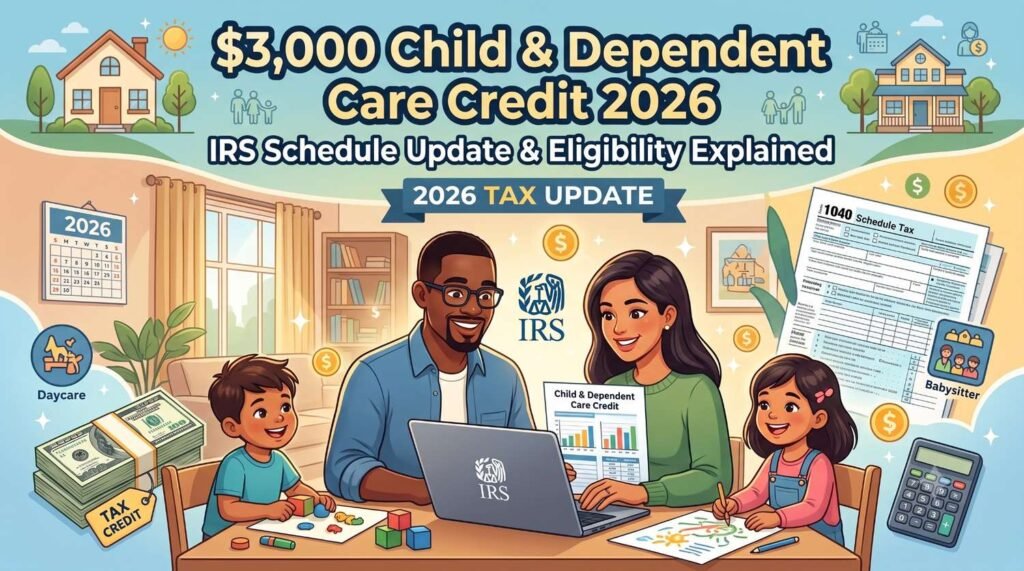
The Child & Dependent Care Credit remains an important tax benefit for families heading into the 2026 tax season. With childcare, adult care, and disability support costs continuing to rise, many U.S. households are closely watching IRS updates for filing guidance and processing timelines.
Although this credit does not provide direct cash payments, it can significantly reduce the amount of tax owed, helping families keep more of their income during tax season.
What Is the Child & Dependent Care Credit?
The Child & Dependent Care Credit is a non-refundable tax credit designed to help taxpayers who pay for care services so they can work or actively look for employment.
It applies to:
Children under age 13
A spouse who is unable to care for themselves due to disability
An adult dependent who requires care support
Families may qualify for up to $3,000 in expenses for one qualifying dependent or up to $6,000 for two or more dependents.
Because it is non-refundable, the credit can reduce taxes owed but cannot generate a refund beyond total tax liability.
Eligibility Rules for 2026
To qualify for the 2026 tax year, taxpayers must meet IRS requirements for eligible dependents and care expenses.
Eligible dependents include children under 13, a disabled spouse, or an adult dependent who cannot care for themselves.
Care providers cannot be your spouse, your child under 19, or anyone claimed as your dependent.
Qualifying care expenses include licensed daycare, babysitters, nannies, after-school programs, and adult daycare or in-home care services.
Taxpayers must also maintain accurate documentation including the care provider’s name, address, and taxpayer identification number to support their claim.
How to Claim the Credit in 2026
To claim the Child & Dependent Care Credit, taxpayers must file Form 1040 along with Form 2441.
Form 2441 is used to report care provider details, total eligible expenses, employer-sponsored dependent care benefits, and the final calculated credit amount.
To avoid delays, taxpayers are encouraged to keep receipts, invoices, and payment records throughout the year and ensure all provider information matches IRS records.
Filing early in the 2026 tax season may help reduce processing delays due to high submission volumes.
How IRS Updates May Affect Families
The credit structure remains unchanged, but rising care costs continue to make it increasingly valuable for working families.
The credit helps reduce overall tax liability, frees up income for essential expenses, and provides financial relief for households managing multiple dependents or high caregiving costs.
Tax professionals expect continued high usage of this credit during the 2026 filing season due to inflation and increased childcare expenses.
FAQs
Yes, the Child & Dependent Care Credit is not a direct payment. It reduces taxes owed but does not provide additional refund money beyond tax liability.
Yes, you may qualify if care services were necessary to allow you to work or seek employment.
Yes, babysitters are eligible care providers as long as they are not disqualified relatives such as your spouse or dependent children.
Yes, cash payments may qualify if proper receipts and provider identification details are maintained.
You must file Form 2441 along with your Form 1040 tax return to claim the credit.
Conclusion
The $3,000 Child & Dependent Care Credit remains a valuable tax relief tool for families managing rising care expenses in 2026. By understanding eligibility rules, maintaining proper documentation, and filing correctly, taxpayers can maximize their benefit and reduce their overall tax burden during the 2026 filing season.